







Diastasis Recti After Pregnancy: Why Crunches Won’t Flatten Your Stomach (and What Will)

I’m cycling five days a week, but…
I’m doing planks every morning, but…
I’m eating clean and barely ever have a cheat day, but…
When you look down at your tummy, something still isn’t right. Your belly bulges forward despite every effort you’ve been putting in.
If this sounds familiar, it’s not your dedication or willpower that’s to blame, and there are many other moms in your situation. You may have diastasis recti, a physical separation of the abdominal muscles that often happens after pregnancy.
Traditional ab exercises like crunches can make this condition worse by putting more strain on weakened tissue. The most effective way to restore your core strength and flatten your abdomen is surgical muscle repair performed during a tummy tuck (abdominoplasty).
What Is Diastasis Recti?
Diastasis recti is the separation of the rectus abdominis muscles, the two vertical muscles that run down the front of your abdomen. These are the muscles commonly referred to as your “six-pack.”
They are connected along the midline by a band of connective tissue called the linea alba. When that connective tissue stretches, as it does to accommodate your growing baby, the linea alba weakens, and the two muscles drift apart.
For some women, the connective tissue retains enough elasticity to close the gap postpartum. However, for many others, the tissue remains permanently stretched, leaving a gap between the muscles that can range from mild to severe. This is diastasis recti.
Why Causes a “Mommy Pooch?”
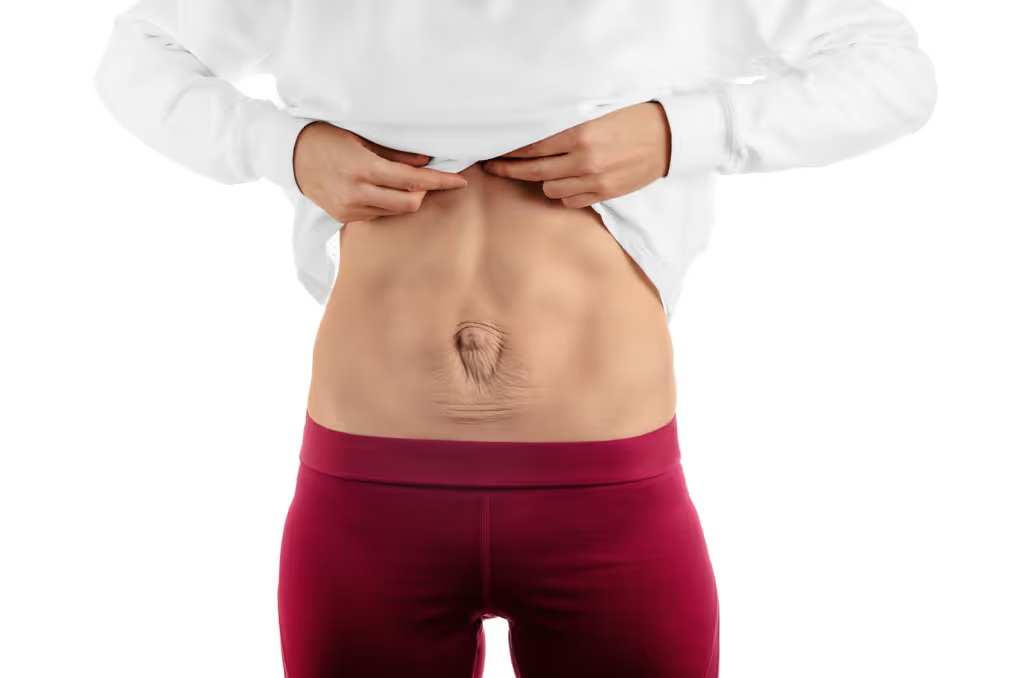
Diastasis recti causes the telltale bulge that many women call a “mommy pooch.” Without an intact abdominal wall holding everything in place, your internal tissue and organs push forward against your weakened midline, producing a rounded appearance that has nothing to do with how lean or fit you are.
Pregnancy is the most common cause of diastasis recti. Research published in the British Journal of Sports Medicine found that approximately 60% of women experience diastasis recti at six weeks postpartum, and roughly 33% still have the condition 12 months after giving birth.
How Do You Know If You Have Diastasis Recti?
Many women live with diastasis recti for years without knowing they have a treatable condition. They assume the belly pooch is leftover “baby weight” when, in fact, the underlying structure of their abdominal wall has changed.
These are a few signs that point toward muscle separation rather than excess fat:
- A visible ridge or dome shape that appears along your midline when you do a sit-up or crunch (“coning”)
- A noticeable change in how your stomach looks depending on the position you’re in (flatter when lying down, more pronounced when standing)
- Poor posture or a general feeling of core weakness
- Persistent lower back pain due to lack of core stability
- Pelvic floor dysfunction
How to Test Yourself for Diastasis Recti at Home
A simple at-home check can give you an initial sense of where you stand.
- Lie on your back with your knees bent and your feet flat on the floor
- Place your fingers just above your navel, with your fingers pointing toward your feet
- Gently lift your head and shoulders off the ground as if starting a crunch
- Feel for a gap or softness between the muscle edges along your midline
- Notice how many fingers (if any) fit into the space between your left and right abdominal muscles
A gap of one or two finger widths is generally considered normal postpartum. A separation wider than two finger widths suggests diastasis recti.
Can Exercise Fix Separated Abdominal Muscles?
For mild diastasis recti. It’s possible for a targeted physiotherapy regime to make a difference. Pelvic floor rehabilitation often complements this work, since those systems are closely connected.
However, moderate to severe diastasis recti is a different story. The muscles can no longer function as a cohesive unit. You can strengthen the muscles around the gap, but you cannot physically close it with exercise once the separation reaches a certain threshold.
If you plan to exercise with diastasis recti, do it wisely. Some of the most popular core exercises can make diastasis recti worse.
Debunking the Crunch Myth
Traditional crunches, sit-ups and planks put your already-weakened midline under significant pressure. Because the muscles and connective tissue are compromised, the pressure takes the path of least resistance: right through the gap in your muscles. This is what causes your stomach to dome or “cone” outward during the exercise.
Then, the harder you work, the more pressure you create, and the more pronounced the bulge can become. The very exercises you think are helping are actually compounding the problem.
When the tissue damage exceeds your body’s capacity to heal, surgical repair is the next step.
How Does a Tummy Tuck Repair Diastasis Recti?
When most people hear “tummy tuck,” they picture a cosmetic procedure. Its aesthetic benefits are undeniable, but what has the biggest impact for many women is the functional improvements.
During an abdominoplasty, Dr. Nodwell sutures your separated rectus abdominis muscles back together along the midline. This internal repair, called rectus plication, is somewhat like cinching the laces of a corset together. It restores the integrity of your core so your abdomen looks flatter, feels firmer and has the strength it needs to function properly.
After repairing the muscles, Dr. Nodwell addresses your aesthetic concerns. He removes stubborn fat and excess, stretched skin that no longer conforms to your body. He finishes by redraping the remaining tissue over the newly tightened muscle wall and suturing it into place.
This strategic combination of internal repair and external enhancement is what produces the beautifully contoured midsection that diet and exercise couldn’t deliver.
When Is the Right Time for a Tummy Tuck After Pregnancy?
Timing is an important consideration for any surgery, but especially if you’re a mom juggling childcare and recovery from pregnancy. Dr. Nodwell generally recommends waiting until:
- You are fully healed from childbirth: You should be at least six months postpartum so your body has had time to recover as much as it can on its own.
- You are at a stable weight: Significant weight fluctuations after surgery can alter your results, so it’s better if you’ve reached a weight you can sustain long-term.
- You have adequate time for recovery: Recovery requires rest. Schedule surgery when you have reliable help with childcare while you heal or wait until your children are more independent.
- You are finished having children: Subsequent pregnancies will likely stretch the repaired muscles again, which may undo the surgical results.
What Type of Post-Pregnancy Surgery Do I Need?
Your procedure will be customized according to your needs and goals.
Dr. Nodwell offers several types of tummy tuck, including the standard tummy tuck, extended tummy tuck, mini tummy tuck, modified tummy tuck and fleur-de-lis tummy tuck.
If your post-baby concerns extend beyond your midsection, Dr. Nodwell may discuss breast surgery, liposuction or a full Mommy Makeover to address multiple areas in a coordinated approach.
During your consultation, Dr. Nodwell will explain your options in detail and help you make the best choice for restoring your comfort and confidence in your body.
Schedule Your Tummy Tuck Consultation With Dr. Nodwell
If you feel like you’ve been fighting a belly battle that exercise and diet can’t win, there might be something happening beneath the surface. Discovering you have diastasis recti can save you months (or years) of frustration and get you on the path to a solution that works.
Schedule your consultation with Dr. Nodwell to discuss your options for muscle repair or body contouring surgery after pregnancy.















How to Plan for Mommy Makeover Recovery When You Have Young Kids at Home
How to Plan for Mommy Makeover Recovery When You Have Young Kids at Home
Diastasis Recti After Pregnancy: Why Crunches Won’t Flatten Your Stomach (and What Will)
Diastasis Recti After Pregnancy: Why Crunches Won’t Flatten Your Stomach (and What Will)

Breast Lift Scars: What They Really Look Like and How They Heal
Breast Lift Scars: What They Really Look Like and How They Heal

Why Post-Weight Loss Body Contouring Surgery Is Surging in 2025
Why Post-Weight Loss Body Contouring Surgery Is Surging in 2025

6 Plastic Surgery Myths Ottawa Patients Need to Stop Believing
6 Plastic Surgery Myths Ottawa Patients Need to Stop Believing

The Menopause Makeover: Embrace Your Best Self at Any Age
The Menopause Makeover: Embrace Your Best Self at Any Age
How do I know which procedure is right for me?
What should I expect during my consultation?
Is there a consultation fee?
What is the cancelation policy?
Do you accent out-of-town patients?
How do I know which procedure is right for me?
What should I expect during my consultation?
Ottawa's Trusted
Plastic Surgeon